-Comprehensive Comparison of Technology, Cost, and Application Scenarios Between Parabolic Antennas and Phased Array Antennas
IntroductionAs Elon Musk’s Starlink sweeps the globe with its low-Earth orbit constellation and tablet terminals, are those rooftop and balcony “dishes” (traditional parabolic antennas) already obsolete? This is a very practical question. This article will objectively compare the two from four dimensions: technical principles, user experience, cost, and reliability , helping you clarify how to choose in different scenarios and hopefully providing readers with a clearer understanding of this revolution in the field of satellite communications.
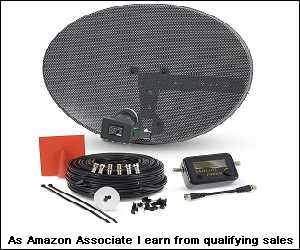
1.Technical Principles: Mechanical Scanning vs. Phased ArrayTraditional satellite antennas (mostly parabolic antennas) work by reflecting and focusing satellite signals onto the feed LNB using a parabolic reflector. To align with a relatively fixed geostationary satellite (GEO, approximately 36,000 km above the Earth), it typically requires a mechanical servo system to adjust the angle. Once installed and fixed, it points in only one direction, receiving signals from a single satellite.
The Starlink terminal is an active phased array antenna . It does not require mechanical rotation, but rather uses electromagnetic wave phase control to electronically adjust the beam direction, tracking high-speed low-Earth orbit (LEO, approximately 550 kilometers above the ground) satellites in real time.
Key difference: Traditional antennas “fixate on a single point,” while Starlink “actively chases a group.” To address the issue of short overhead transit times (only a few minutes) for low-Earth orbit satellites, Starlink must employ phased array technology capable of switching beams at the millisecond level, a capability that mechanical antennas cannot handle.
https://antesky.com/with-starlinks-arrival-are-traditional-satellite-antennas-st...https://antesky.com/with-starlinks-arrival-are-traditional-satellite-antennas-st...2. User Experience: High Latency Stability vs. Low Latency InterconnectionDelay and Speed
Traditional satellite signals often have latency exceeding 600 milliseconds due to their long distances, causing video calls to stutter and games to malfunction. Starlink, on the other hand, boasts latency as low as around 25 milliseconds, almost comparable to terrestrial fiber optic connections. In terms of speed, Starlink users can achieve 100-200 Mbps, while traditional consumer-grade satellite broadband typically only reaches a few Mbps to tens of Mbps.
Continuity and Reliability
Traditional parabolic antennas, once aligned, provide extremely stable signals, unaffected by satellite overpass switching. While Starlink boasts advantages in low latency, as a complex new network, it has also experienced large-scale network outages. For example, from July to August 2025, a core network software issue caused tens of thousands of users worldwide to lose internet access for several hours, exposing the shortcomings of its “aerospace-grade rapid iteration” model in pursuing “telecom-grade reliability.”
Interference resistance and environmental adaptability
Traditional parabolic antennas are relatively robust in severe weather conditions such as heavy rain (especially in the C-band). Starlink’s Ku/Ka bands are susceptible to rain attenuation, and phased array terminals may experience performance degradation due to heat dissipation or snow removal power consumption in extreme high temperatures or snow accumulation.
3. Cost and InvestmentTraditional parabolic antennas: A typical parabolic antenna costs only a few hundred RMB, and is usually a one-time payment for lifetime use (if only free-to-air programming is received). Even paid satellite TV services have relatively low monthly fees.
Starlink terminals: Initially, hardware costs were as high as $499-$599 (approximately RMB 3500-4300). Although prices have decreased in recent years, they are still far higher than traditional antennas. Monthly fees for Starlink residential users are approximately $120 (approximately RMB 860). While a $5/month “standby mode” (limited to 0.5Mbps) was introduced in 2025, this is only suitable for emergency and IoT scenarios and is not a replacement for high-speed internet.
4. Scenario Comparison: Which is More “Necessary” ?Application scenarios
Home Broadcast Television
Traditional satellite antenna: The optimal solution. Low price, stable signal, and abundant program sources.
Starlink/Phaseed Array Terminal: Over-provisioning. High cost and requires a streaming service subscription.
Internet access in remote areas
Traditional satellite antenna: It is almost unusable (traditional satellite internet is expensive and has a poor user experience).
Starlink/Phaseed Array Terminal : Revolutionary. The only solution that can provide a near-terrestrial broadband experience.
Emergency Communications/Scientific Research
Traditional satellite antenna: It is bulky and complicated to install.
Starlink/Phaseed Array Terminal: Highly portable. The slim and lightweight flat panel antenna can be deployed quickly.
Vehicle-mounted/Ship-mounted/Aviation
Traditional satellite antenna: It’s basically not feasible. Mechanical servos cannot handle frequent switching and over-the-top blind spots.
Starlink/Phaseed Array Terminal: Naturally compatible. Electronic scanning withstands bumps and high-speed movement.
direct satellite connection from mobile phone
Traditional satellite antenna: It cannot be achieved.
Starlink/Phaseed Array Terminal: Future potential. Requires integration with low-Earth orbit constellations and large-scale antenna arrays.
Conclusion: It’s not about replacement between parabolic antenna and Starlink/Phaseed Array Terminal, but division of labor.
So, is a traditional parabolic satellite dish still necessary? The answer is: It depends on where you are and what you need the internet for.
If you live in a town or countryside and your primary need is watching television: a traditional antenna remains the most economical and practical choice. Its extremely low cost and mature ecosystem continue to give it an irreplaceable advantage in broadcast television transmission.
If you are in a remote area without terrestrial network coverage, or need high-speed internet access while on the move (such as by plane or ship): low-Earth orbit constellations like Starlink combined with phased array terminals are currently the only solution.
The emergence of Starlink is not simply about “eliminating” traditional antennas, but rather about broadening the scope of satellite communications. It has propelled satellite internet from a “necessary narrowband connection” to a level of “broadband competition.” Traditional parabolic antennas serve the purpose of “seeing,” while Starlink serves the purpose of “connecting.” In the foreseeable future, the two will coexist in different niches based on cost, application scenarios, and reliability requirements.
Antesky Science Technology Inc. was built in 1985, we’re mainly engaged in the design and manufacture of satellite communication large Satellite Dish Antenna,VSAT antenna,TVRO antenna, Portable flyaway antenna and relevant control and tracking system. We have a selected range of antenna in the frequency band, such as C-band, Ku-band, X-band, L-band, S-band, Ka-band, DBS-band.
If you are looking for any other satellite communication dish or related accessories, please send Antesky an inquiry via sales@antesky.com. Thanks!