Choosing the correct satellite antenna size is one of the most important decisions when designing or installing a satellite communication system. The antenna size directly affects signal strength, communication reliability, and overall system performance. Whether you are building a teleport, deploying a VSAT network, or setting up an earth station, understanding how antenna size influences performance will help you select the right equipment for your project.
1. Why Antenna Size Matters
The size of a satellite antenna determines its gain, which is the antenna’s ability to focus radio signals in a particular direction. Larger antennas have higher gain because they collect and concentrate more energy from the satellite signal.
Higher gain provides several advantages:
Stronger signal reception
Improved link reliability
Lower interference from nearby satellites
Better resistance to weather effects
In satellite communication systems, especially those using geostationary satellites, signal levels can be relatively weak. Therefore, selecting an appropriately sized antenna ensures that the communication link remains stable and efficient.
2. Common Satellite Antenna Sizes
Satellite communication systems typically use parabolic dish antennas in a variety of sizes. The most common antenna sizes include:
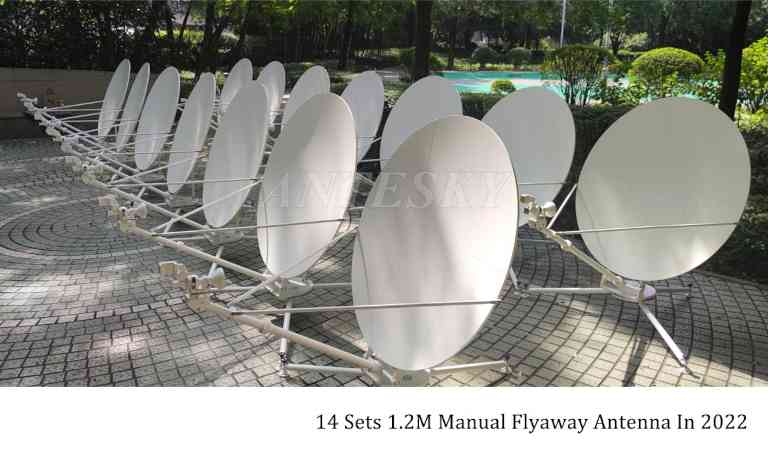
1.2 m – 1.8 m antennas
These are usually used for small VSAT networks and enterprise communications. They are suitable for Ku band applications and locations where signal coverage is strong.
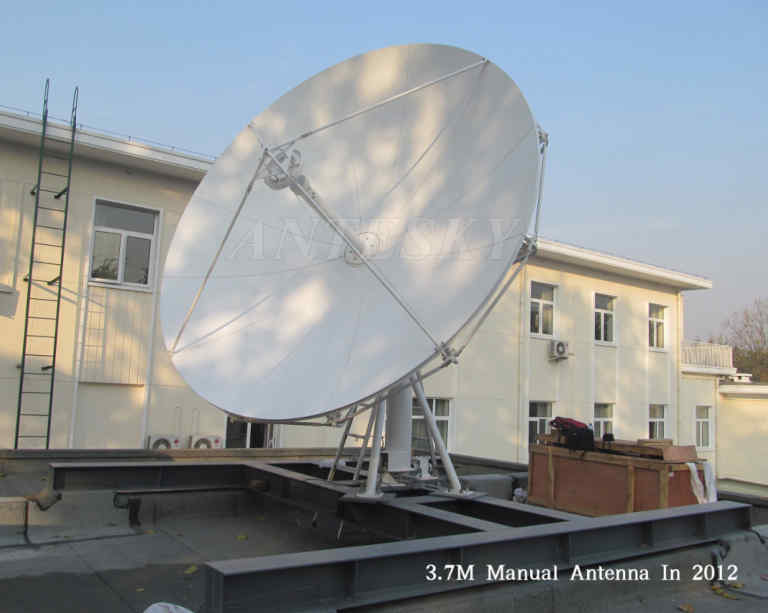
2.4 m – 3.7 m antennas
These medium-size antennas are widely used in professional communication systems, including broadcast uplinks and medium earth stations.
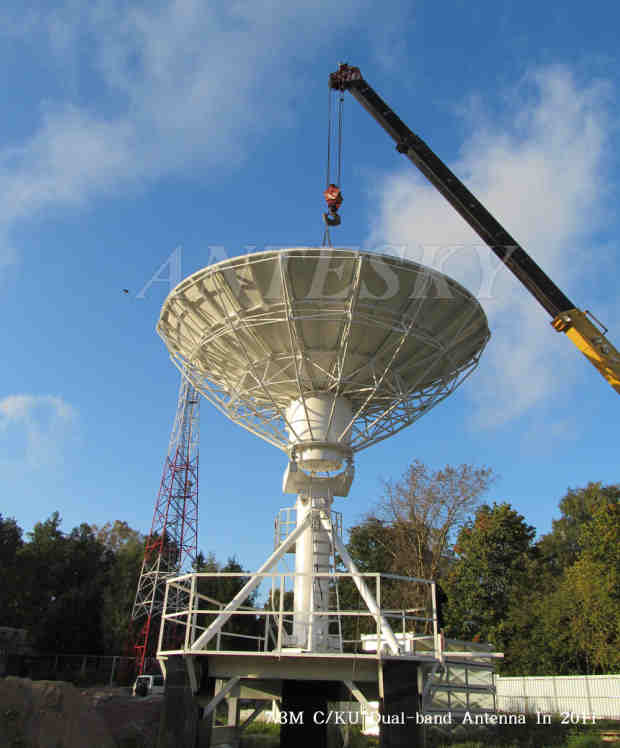
5 m – 7.3 m antennas
Larger antennas provide higher gain and are commonly used in teleport facilities, satellite gateways, and critical communication infrastructure.
For example, many earth station systems use antennas such as the 3.7m C
Band Antenna or the 7.3m Earth Station Antenna to achieve higher signal performance.
3. Frequency Band Considerations
The operating frequency band of the satellite system also plays an important role in antenna size selection. Different frequency bands require different antenna sizes to achieve the same level of gain.
For instance:
Systems using C Band typically require larger antennas because the signal wavelength is longer.
Systems operating in Ku Band can use smaller antennas while still achieving sufficient gain.
High-frequency systems using Ka Band often use even smaller antennas due to the shorter wavelengths.
However, higher frequency bands are generally more sensitive to rain attenuation, which may require careful link budget planning.
4. Link Budget Requirements
Another critical factor when choosing antenna size is the link budget, which is the calculation of signal strength throughout the communication link.
A typical link budget considers:
Satellite EIRP
Antenna gain
Path loss
Atmospheric attenuation
Receiver sensitivity
If the link budget shows that additional signal margin is needed, increasing the antenna size is often the most effective solution. Larger antennas improve both transmit and receive gain, which helps maintain a stable communication link even during adverse weather conditions.
5. Installation Environment
The physical environment where the antenna will be installed also affects antenna size selection.
Key factors include:
Available installation space
Wind load and structural support
Local regulations
Maintenance accessibility
For example, large antennas used in teleport facilities require solid foundations and structural support to withstand strong winds. In contrast, smaller antennas used in VSAT systems are easier to install and maintain.
6. Application Requirements
Different applications have different antenna requirements.
Typical examples include:
Teleport stations
Broadcast uplink facilities
Enterprise VSAT networks
Government or military communication systems
Maritime satellite communications
High-capacity and mission-critical applications generally require larger antennas to ensure maximum reliability.

Conclusion
Selecting the right satellite antenna size requires careful consideration of several factors, including frequency band, link budget requirements, application type, and installation conditions. While smaller antennas may be suitable for simple VSAT deployments, larger antennas provide higher gain, better signal quality, and improved communication reliability.
By evaluating your system requirements and working with experienced antenna manufacturers, you can choose the antenna size that delivers the optimal balance between performance, cost, and installation practicality. Proper antenna selection is essential for building a robust and efficient satellite communication network.
Whether the application involves enterprise VSAT networks, broadcast uplink stations, or government and emergency communication systems, working with an experienced and reliable supplier can make a significant difference in overall system performance. Companies such as Antesky have long been focused on satellite communication antenna systems and related engineering solutions, offering customized designs and technical support tailored to different operational scenarios. This helps ensure stable and efficient connectivity even in demanding environments. If you would like to learn more or discuss a specific project, you can contact us at sales@antesky.com for professional support and tailored solutions.