|
Jun 21st, 2015 at 12:37pm
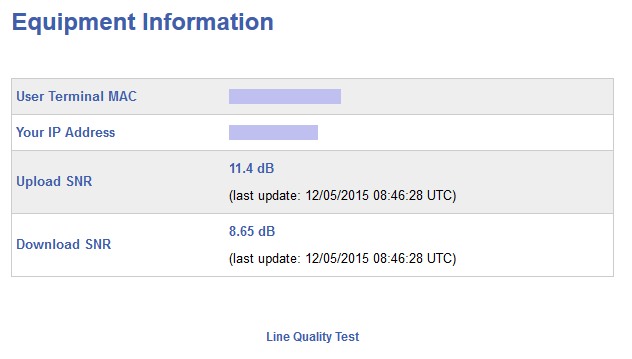
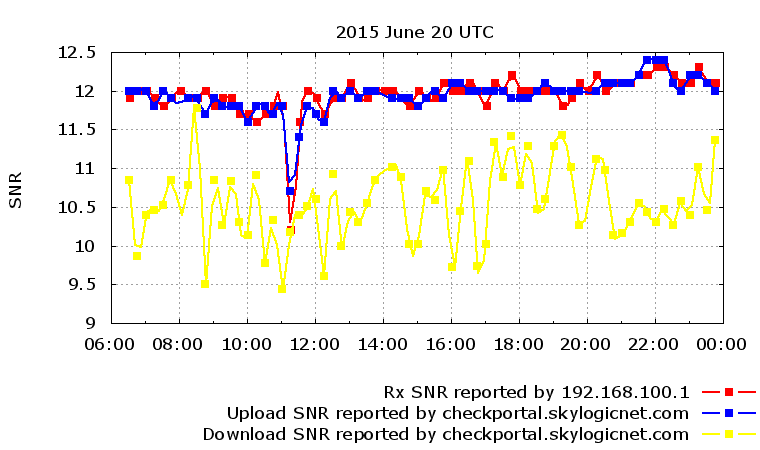
you have a point there - I will have to monitor simultaneaously what the modem (and Tria) pages say, and what the checkportal says. But then again, some values in the modem are "commanded" "to be shown" or "calculated" values (just look at what is supposed to be cable attenuation when the system is powred up and scanning - it shows total nonsense for cable attenuation until it finds it's spot frequency (because it tries all spot channels regardless what your set-up was).
The upload SNR should actually reflect the signal thet the sat receives from you and reports (probably not often, and with a delay), to the hub, while your Tria shows how much power in dBm it is sending to the sat on request of the hub. So this figure can vary depending on the needs of the link. Good pointing, as I said earlier, also comes into play. The transmit beam, if I'm not wrong, is on the higher band end, and much narrower than the receive beam, so you could be "a tad off" and get weird results on the figures. Even with pointing as per manual, I ind the last test has to be slight bending of the dish (still a bit too flexy, if you ask me), to the left, right, up, and down, to see if you're really spot-on the beam centre. Cloudy weather doesn't help in such cases, because the pointing beep reflects the quite significant signal variations created by the clouds. On a Astra2connect site, I have once even reverted to the old "point and shout" method where a helper loudly reads out the exact rx decibels to me while I fine point. Very stupid impractical 60's method, but works. I'm not yet ready to go up on roofs with the laptop end sat modem, lol, but it could happen one day.
|