|
Apr 6th, 2017 at 4:05pm
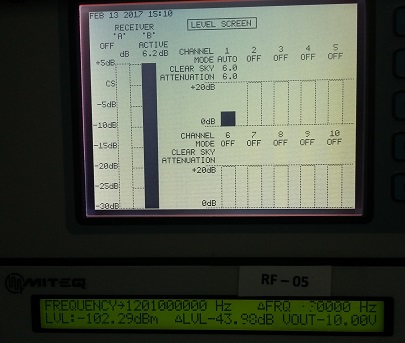
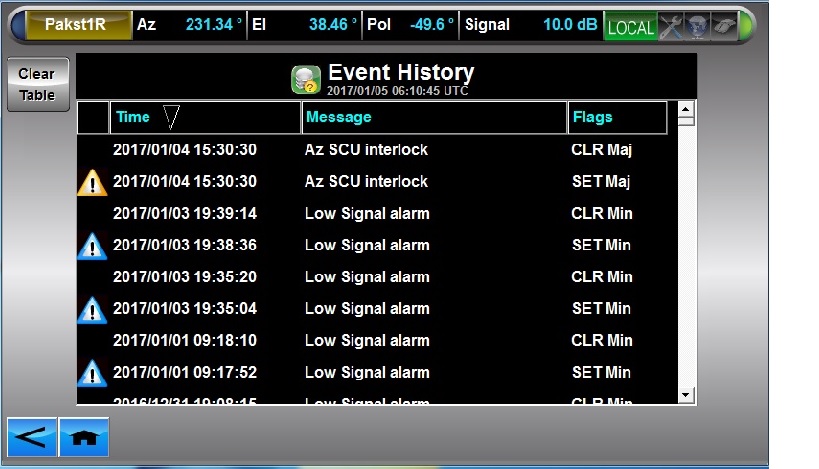
If your beacon receiver is giving low signal alarm I would immediately check to see if the wanted traffic is also low level.
Are you still receiving the normal wanted traffic signals from the wanted satellite ?
If RX traffic is OK, I would put the AUPC into manual mode and reduce the BUC/HPA power and transmit EIRP to normal level, assuming clear sky conditions. The NOC will then stop complaining that you are transmitting 6 dB too high. If your uplink bandwidth occupies a significant proportion of a transponder your excessive transmit power may cause many other customers to lose service. You will also cause uplink and downlink cross-pol interference.
If all RX traffic is gone, turn the transmit OFF and check the LNB and antenna az-el pointing. Switch to redundant LNB or re-point dish, as required, to regain wanted satellite and restore service.
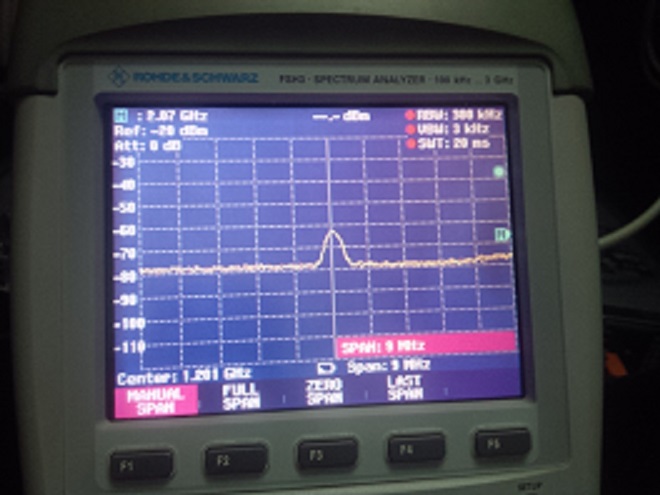
If you have a problem associated with just the beacon receiver and its input cable, set the AUPC to manual and set normal transmit level while investigating. Consider using spectrum analyser to see if the beacon signal still exists at the expected frequency and level on the cable at the beacon receiver input.
A general bit of advice about beacon receivers, tracking receivers and AUPC.
It is important that the whole system is linear. Problems I have encountered are: 1. Excessively high gain LNA/LNB with large antenna pointed at satellite with TV carriers intended for small home dishes. Symptom: Antenna pattern did not look right and intermodulation on RX. Cure: Low gain LNB so its output stage transistor was not saturated. 2. Excessively high input level to beacon receiver. Symptom: Tracking did not peak up properly. Cure: 30 dB attenuator on beacon receiver input.
It is essential that 1, 2, 5, 10, 15 dB reductions of signal level into the dish cause identical matching changes on the beacon receiver display and in the scaled analogue voltage output. Adjust things so that the clear sky output voltage is towards the upper end of the whole working voltage range.
A general bit of advice about peaking up the dish pointing on a large dish.
Once you think you are pointed at main beam peak, move the dish about sideways and check that you see first sidelobes either way. They should be about 10 to 15 dB down and similar level to each other.
Repeat in elevation. All four sidelobe peaks should be similar. See https://www.satsig.net/sub-reflector-alignment.htm
If you ever see what appears to be two main beams move to the hollow or small hump between them and change direction and see what happens. You were peaked on the first sidelobe!
|