
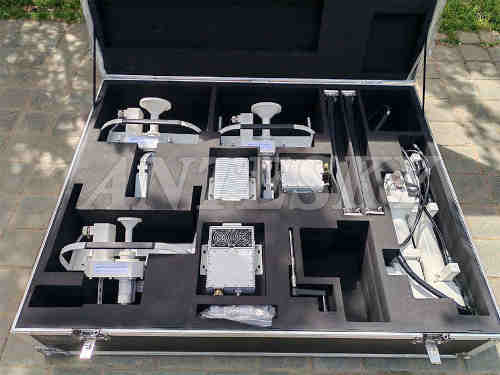
In modern wireless communication systems, power amplifiers (PA) play a vital role. Whether it is our smartphones, Wi-Fi routers, or large ground stations and satellite communication systems, PA are one of the core components that ensure that signals can be transmitted effectively. Previously, we'd showed the development of Power Amplifiers(PAs). Welcome to click this link for details.This article will explore the important role of Power Amplifier(PA) in antenna communication systems and their working principles.
The main function of the power amplifier(PA) is to amplify the low-power signal to a sufficient power level to drive the antenna and achieve long-distance communication.
1. Basic functions of power amplifier(PA)
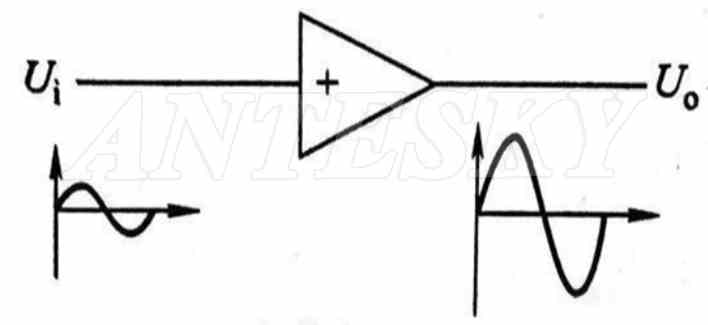
As the name implies, the power amplifier's main function is to amplify the power of the signal. In an antenna communication system, the power amplifier(PA) is located at the end of the transmission link and is directly connected to the antenna.
In wireless communication systems, the role of the power amplifier(PA) can be summarized as follows:
Signal amplification: Amplify the low-power signal output by the modulator to the required transmission power.
Basic functions of power amplifier
Impedance matching: Ensure impedance matching between the power amplifier(PA) and the antenna to maximize power transfer efficiency.
Impedance matching of buc
Linearity guarantee: While amplifying the signal, minimize distortion and ensure signal integrity.
Linearity guarantee of buc
Efficiency optimization: Under the premise of meeting performance requirements, improve the efficiency of the power amplifier(PA) as much as possible and reduce system power consumption.
2. Key performance indicators of power amplifiers(PA)
To evaluate the performance of an amplifier, engineers usually focus on the following key parameters:
Gain: The ratio of output power to input power (usually expressed in dB )
Efficiency: The ratio of RF output power to DC input power
Linearity: The ability of an amplifier to maintain a linear relationship between output and input
Bandwidth: The frequency range over which an amplifier can operate effectively
Harmonic distortion: Harmonic components generated due to nonlinear characteristics
3. Interaction between power amplifier (PA) and antenna system
The power amplifier(PA) does not work independently, it has a complex interactive relationship with other parts of the system.
(1) Power amplifier(PA) and antenna
Impedance matching: Impedance matching between antenna and power amplifier is the key to system design. If the matching is poor, it will increase the reflected power, reduce the efficiency of the power amplifier(PA), and even damage the power amplifier.
Load mismatch: In actual applications, the antenna may cause impedance mismatch due to environmental changes (such as proximity to metal objects). The load mismatch capability of the power amplifier(PA) (such as standing wave ratio tolerance) directly affects the reliability of the system.
Radiation efficiency: The output power and linearity of the power amplifier(PA) directly affect the radiation efficiency of the antenna. If the nonlinear distortion of the power amplifier(PA) is large, it may cause the signal spectrum to expand and interfere with other frequency bands.
(2) Power amplifier(PA) and filter
Harmonic suppression: The signal output by the power amplifier(PA) usually contains harmonic components, which may interfere with other frequency bands. The function of the filter is to suppress the harmonics and ensure that the output signal meets the spectrum specifications.
Out-of-band noise: The noise performance of the power amplifier(PA) will affect the receiving sensitivity of the system. The filter can suppress the out-of-band noise generated by the power amplifier(PA) and improve the signal-to-noise ratio of the system.
(3) Power amplifier and modem
Linearity requirements: Modern communication systems (such as 5G) use complex modulation methods (such as QAM, OFDM), which have extremely high requirements on the linearity of the power amplifier(PA). If the linearity of the power amplifier(PA) is insufficient, it will cause signal distortion and reduce the bit error rate performance of the system.
Dynamic range: The signal power at the modem output may vary dynamically, and the power amplifier(PA) needs to have sufficient dynamic range to handle these changes while maintaining high efficiency.
(4) Amplifier and power supply
Power efficiency: The efficiency of the PA directly affects the overall power consumption of the system. A high-efficiency PA reduces the burden on the power supply and extends battery life (in mobile devices).
Power supply noise: Power supply noise may be coupled into the RF signal through the power amplifier(PA), affecting the signal-to-noise ratio of the system. Therefore, power supply design needs to consider noise suppression.
4. Application of different types of power amplifiers(PA)
Depending on the application scenario, the communication system will use different types of power amplifiers(PA):
Class A amplifier: high linearity but low efficiency (theoretical maximum efficiency 50%), suitable for occasions with extremely high signal quality requirements
Class B amplifier: high efficiency (theoretical maximum efficiency 78.5%) but has crossover distortion
Class AB amplifier: a compromise between Class A and Class B, taking into account both efficiency and linearity
Class D amplifier: switch mode amplifier, very high efficiency (up to 90% or more) but poor linearity
Class E and Class F amplifiers: Specially designed high-efficiency switch-mode amplifiers
Future development trends of power amplifiers(PA)
The future development of power amplifier(PA) technology may focus on the following directions:
Higher efficiency: meeting the needs of green communications and energy conservation and emission reduction
Wider bandwidth: Supports multi-band and multi-standard communications
Higher integration: Integrate the power amplifier with other RF front-end components
AI Optimization: Using machine learning algorithms to optimize amplifier performance and operating points
As a key component in the antenna communication system, the performance of the power amplifier(PA) directly affects the quality, efficiency and reliability of the entire communication system. With the rapid development of technologies such as 5G, Internet of Things and satellite communications, higher requirements are placed on power amplifier technology. Understanding the role and principle of power amplifiers not only helps in the design of communication systems, but also helps us better understand the engineering challenges behind modern wireless technologies.